
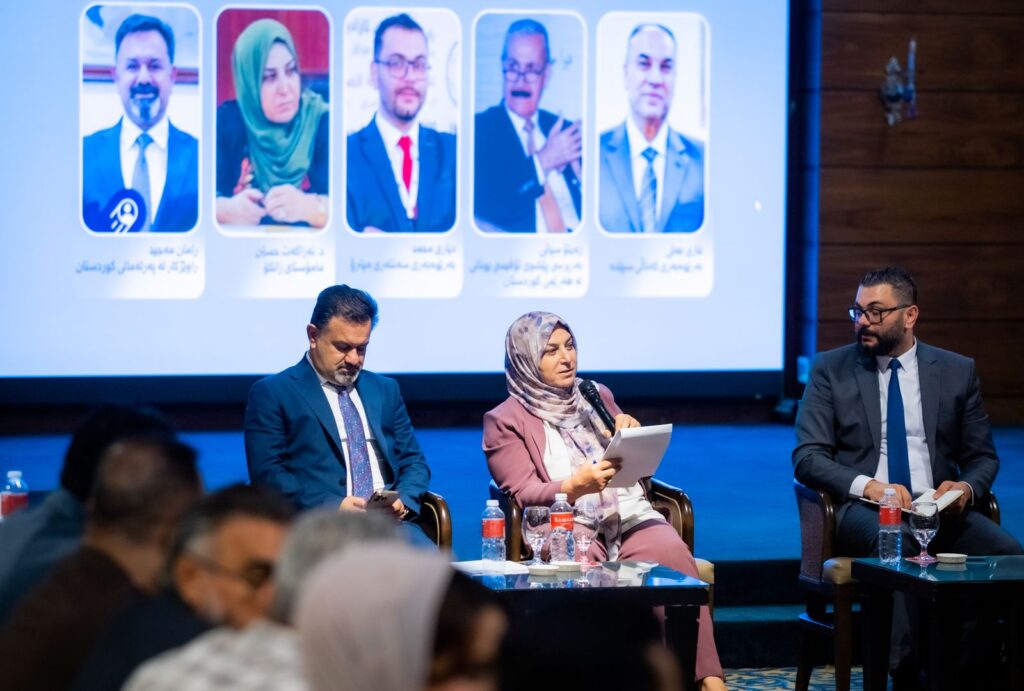
ERBIL, Iraqi Kurdistan Region — Media leaders, academic experts, and civil society representatives gathered in Erbil on Tuesday, August 11, for a constructive roundtable discussion on the evolving landscape of Kurdish media and the path toward greater professional standards.
Organized by the Metro Center for Journalists’ Rights and Advocacy in partnership with the CFI Qarib project, the panel titled “Kurdish Media and Professionalism Amidst Internal Conflicts” examined the historical origins, contemporary structural challenges, and future opportunities for press development across Iraq and the Kurdistan Region.
The forum, moderated by Metro Center Director Dyari Mohammad, brought together nearly 100 participants to foster dialogue among industry stakeholders, government advisors, and media practitioners.
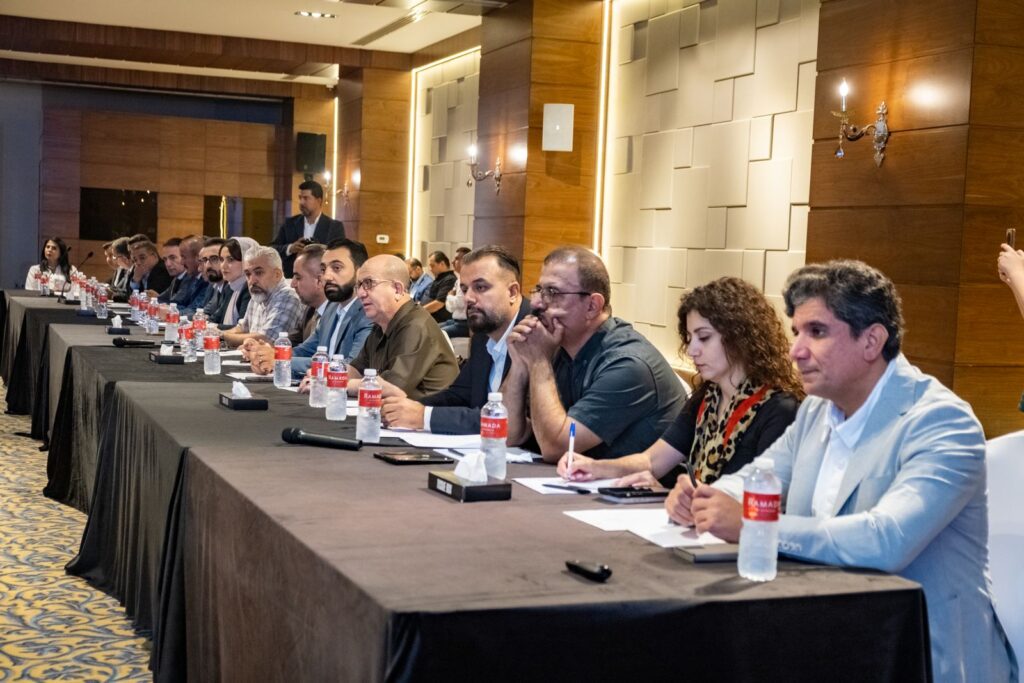
Examining the Media Landscape and Professional Challenges
Opening the panel, Dr. Nazakat Hussein, a university professor and media expert, reflected on the historical evolution of media in the region. She noted that much of the local media sector historically emerged alongside political movements to voice political platforms, which influenced how institutional priorities developed over time. With more than 1,200 registered outlets and digital platforms operating across the Kurdistan Region, Dr. Hussein emphasized the growing need for media institutions to balance organizational objectives with broad public interest and social cohesion.
Building on the discussion of media impact, Raman Majeed, Advisor to the Kurdistan Parliament on Media & Communication, addressed the importance of sustained thematic reporting. Mr. Majeed highlighted that coverage of critical governance and social issues often fluctuates quickly, limiting the opportunity for meaningful policy dialogue or institutional follow-through. He encouraged outlets to adopt longer-term investigative strategies to better serve public accountability.
Reflecting on broader regional dynamics, human rights advocate and former UNAMI official Zaito Sian shared insights into press freedom trends across Iraq. He noted that media environments face heightened sensitivities during election seasons and periods of civic movement, underscoring the necessity for robust legal frameworks and institutional protections that support journalists in carrying out their work safely and independently.
Strengthening Ethical Standards and Inclusivity
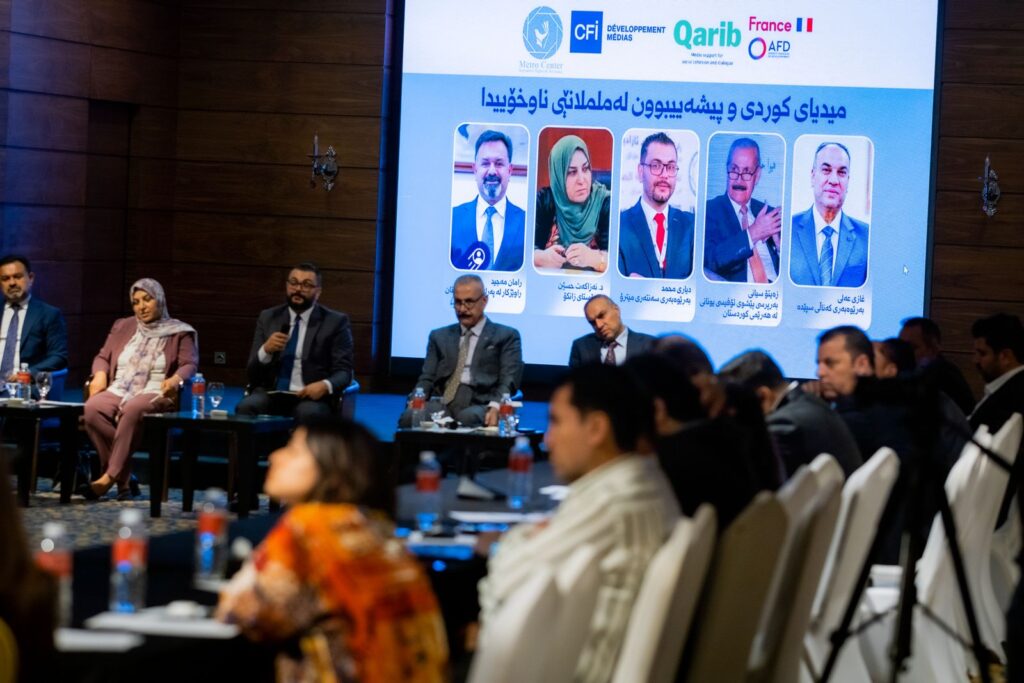
Addressing broadcasting standards, Ghazi Ali, General Manager of Speda TV, highlighted the role of media in supporting social harmony. He proposed that media institutions across the spectrum collaborate on a shared code of ethics designed to promote balanced reporting, protect community values, and prevent political tensions from diminishing public confidence.
During the open floor session, participants engaged in a candid exchange regarding key operational challenges facing modern newsrooms. Attendees discussed the impact of political funding models on editorial objectivity, the imperative to expand female representation in executive and decision-making roles, and the pressure generated by digital competition. Panelists and guests alike acknowledged that high-speed digital publishing can sometimes elevate sensationalism over rigorous fact-checking, signaling an urgent need for industry-wide adherence to ethical standards.
Strategic Steps Forward
To translate discussion into actionable reform, participants reached a consensus on two strategic priorities for the sector:
The assembly recommended convening a multi-panel National Media Conference bringing together local outlets, academic researchers, and international partners. This event would aim to conduct a comprehensive assessment of industry needs and culminate in the adoption of a unified Ethical Media Charter for journalists across the region.
Additionally, stakeholders called for commissioning empirical, region-wide research to measure audience satisfaction and public trust. By gathering direct data on public expectations and media perception, newsroom leadership will gain empirical guidance to inform editorial adjustments, modernise organizational structures, and better serve the community.