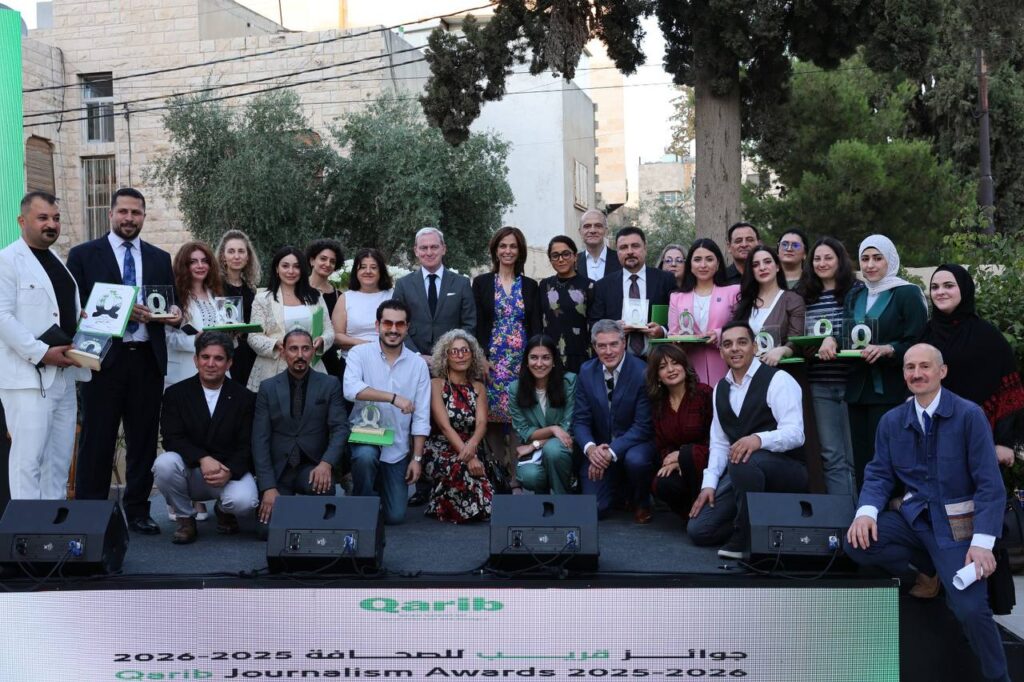
The Qarib Journalism Awards 2025–2026 honours 21 journalists who reported on the people and topics their societies overlook – from Gaza to Baghdad, Beirut to Amman.
Patients locked away and forgotten inside a Jordanian psychiatric ward. Women in Iraq buried in graves that bear no name. Children married off under the cover of war. The air over Baghdad, quietly poisoning the people who breathe it.
These are among the 17 stories – reported by 21 journalists across Iraq, Palestine, Lebanon and Jordan – honoured at the third and final Qarib Journalism Awards.
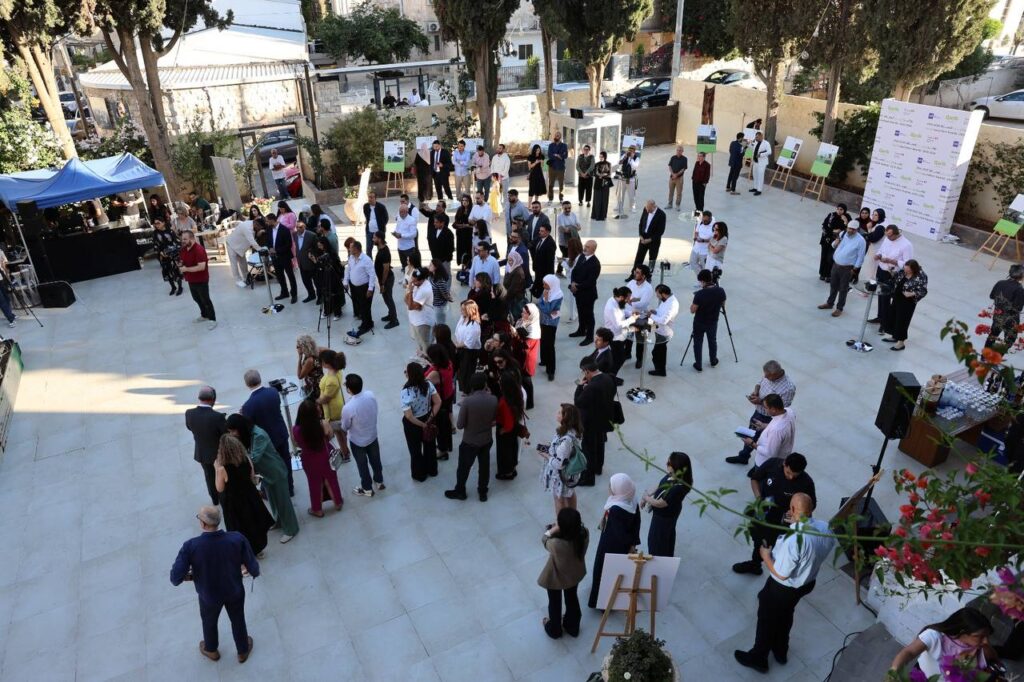
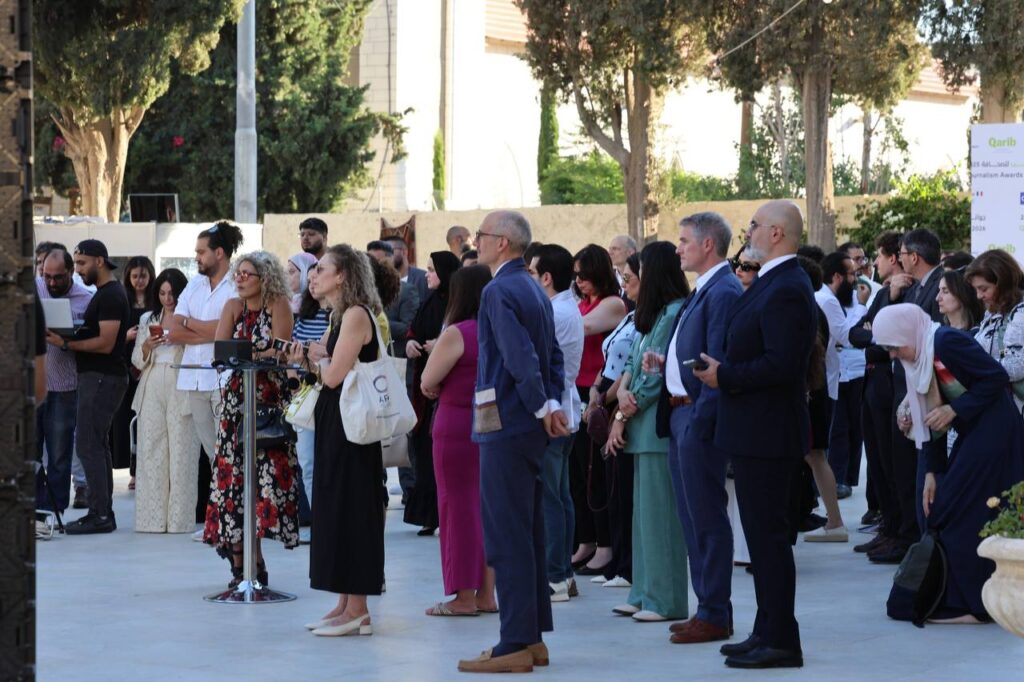
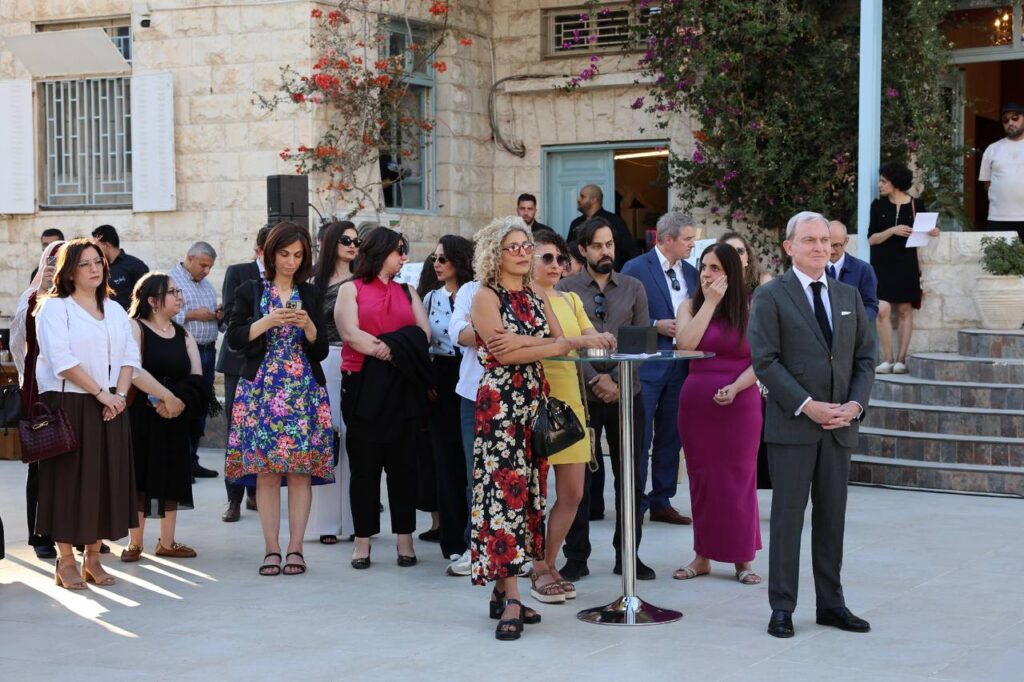
Amman, 29 June 2026 – More than 120 guests gathered in Amman on Monday evening for the ceremony: journalists, editors, representatives of more than 45 partner media organisations, civil society groups and members of the diplomatic community in Amman.
The ceremony was organised by the Qarib programme, implemented by CFI and funded by the Agence Française de Développement (AFD). The winning stories shed light on some of the most pressing yet underreported issues facing communities across Jordan, Lebanon, Iraq and Palestine.
The evening carried particular weight, coming as the programme enters its final months after nearly six years of supporting independent media and public-interest journalism across the four countries. Among the guests were His Excellency Franck Gellet, Ambassador of France to Jordan, and Bérangère Callamand, Deputy Regional Director of AFD.
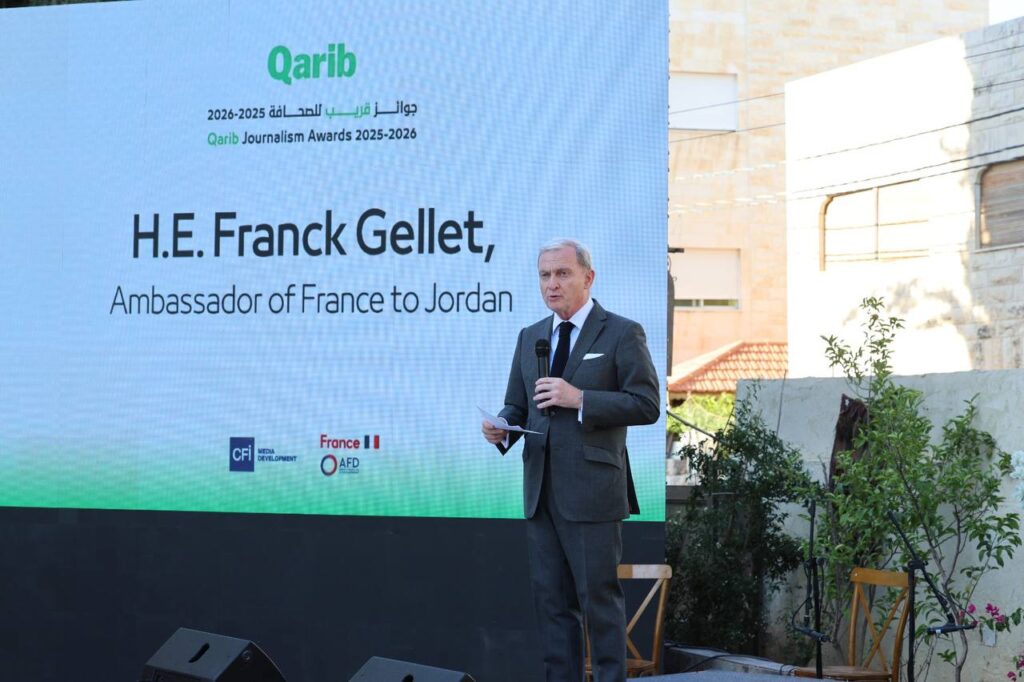
“At a time when information is produced and circulated instantly, the need for trusted, independent and responsible journalism has never been more important”, said Franck Gellet, Ambassador of France to Jordan.
The journalism recognised this year cannot be separated from the conditions under which it was made. In Gaza, journalists reported through a war that killed tens of thousands of people and left much of the territory in ruins. It has also been the deadliest war for the press ever recorded: Israel has killed more journalists than any government since the Committee to Protect Journalists began keeping count in 1992. Some of those killed were colleagues, partners and friends of this programme.
In Lebanon, reporters worked through economic collapse and renewed war on the south; in Iraq, where corruption and weak oversight leave ordinary people unprotected; in Jordan, through social realities that seldom reach national debate. The journalists honoured here did not cover these realities from a safe distance; they lived inside them and kept working. What unites their stories is a refusal to let the people most affected by war, displacement and exclusion disappear from the public record.
Across all five categories, the jury recognised work addressing environmental degradation, women’s rights, youth concerns, corruption, local governance, conflict and displacement. While diverse in subject matter, the winning entries shared a commitment to rigorous reporting, public accountability and the representation of voices too often absent from mainstream coverage.
Best Journalistic Coverage of Climate and Environmental Issues
This year’s environmental reporting refused the comfortable abstraction of “climate” and brought it down to the air people breathe and the ground they bury their dead in.
First Place: Toxic Air Over Baghdad: How Iraq’s Gasoline Threatens the Lives of Its Citizens — Mohammed Al-Sudani (Iraq), published on Aber
Second Place: Oil Waste and the Aftermath of Drought Compound Iraqis’ Hardship — Aya Mansour (Iraq), published on Independent Arabia
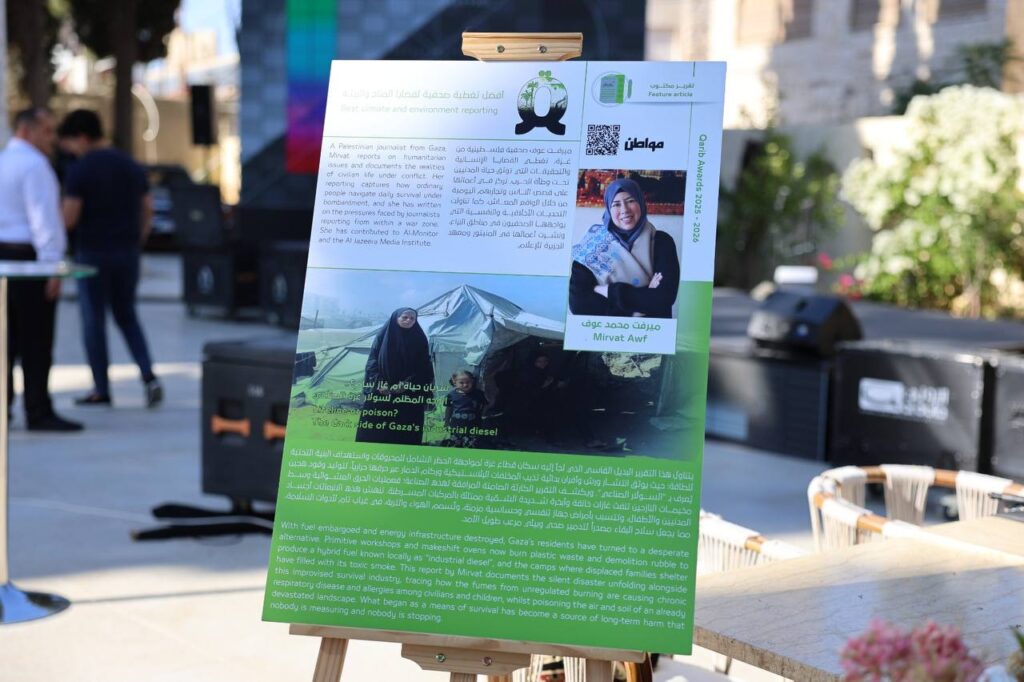
Third Place: A Lifeline or Toxic Fumes? The Dark Side of Gaza’s Industrial Diesel — Mirvat Awf (Palestine), published on Muwatin
Best Gender-Sensitive Coverage of Women’s Rights
The strongest work in this category insisted on women’s testimony as primary evidence.
First Place: Palestinian Women Share How Israeli Forces Used Them as Human Shields in Gaza and the West Bank — Majd Jawad (Palestine), published on Raseef22
Second Place: “Bruises” Mark the Face of Displacement in Gaza: Domestic Violence, with the Ever-Ready Justification of ‘War Pressure’ — Hala Abu Aisha (Palestine), published on Albawaba 24
Third Place (Joint Winners):
Child Marriage: Legal Exceptions Under the Shadow of War — Najlaa Alskafi (Palestine), published on The Last Story
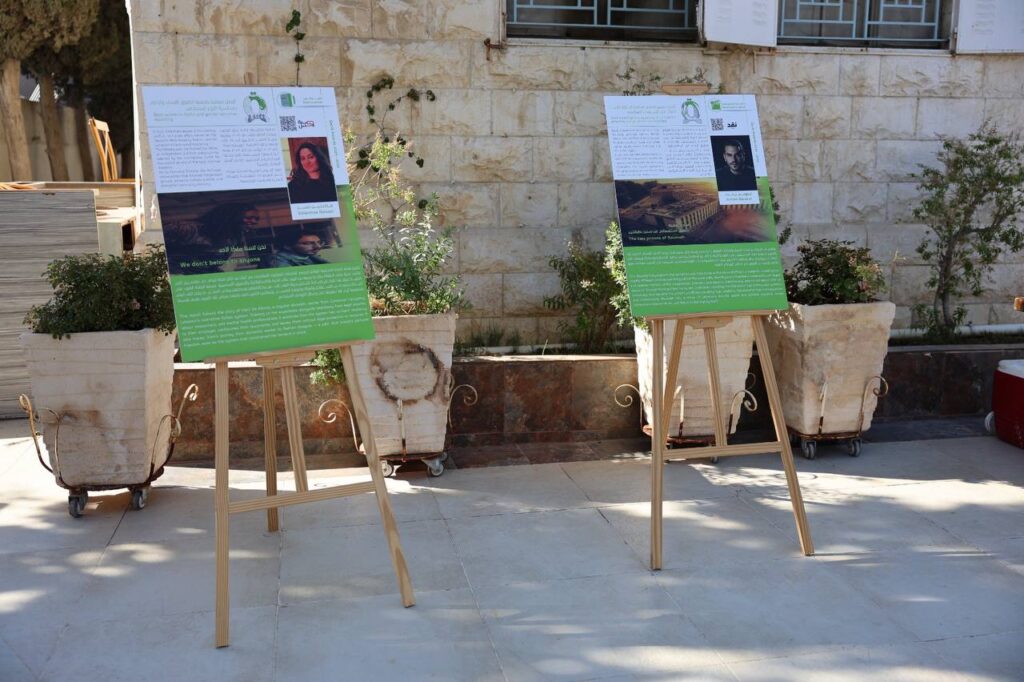
We Are Not Anyone’s Property — Valentine Nesser (Lebanon), published on Silat Wassel
Best Coverage of Socio-Economic Issues and Local Governance
This category mapped the gap between citizens and the systems meant to serve them.
First Place: Freedom Denied: Psychiatric Patients Trapped Inside the Forensic Ward of Al-Fuheis Hospital in Jordan — Ola Al-Amleh (Jordan), published on ARIJ
Second Place: Kurdistan Workers Are Injured and Killed in Workplace Accidents Without Receiving the Rights Guaranteed by Law, Amid Tribal Settlements and Lack of Legal Awareness — Karwan Najeeb (Iraq), published on Nirij
Third Place: The Graveyards of “Unknown Women”: On the Pretext of Defending Family Honour, Criminals in Iraq Escape Punishment Thanks to the Power of Tribes and Local Traditions — Asaad Al-Zalzalee (Iraq), published on Aber
Best Coverage of Youth Concerns by Young Journalists (18–30)
The young journalists in this category wrote about their own generation with unusual clarity.
First Place: What Remains of Gaza — Bayan Abutaema (Jordan), published on Khat 30
Second Place: Jordanian Youth and Questions of Anxiety — Hussam El-Din El-Ibrahim (Jordan), published on Alnajaah
Third Place: “Made in the South” Is a Youth Project That Defies War and Destruction — Fatima Al Bassam (Lebanon), published on Manateq
Best Investigative Reporting on Corruption Affecting Marginalised Communities
The investigative work this year was distinguished by its insistence on naming who pays for corruption.
First Place: Deadly Deliveries in Iraq: The Hidden Face of Delivery Companies in Iraq — Hassan Al-Shanoon, and Mizar Kamal (Iraq), published on ARIJ
Second Place: Illegal Landfills and Unenforced Closures: Iraq’s Diyala Residents Face a Slow Death — Istabraq Al-Zubadi, Israa Tareq and Tamarah Emad (Iraq), published on Daraj
Third Place (Joint Winners):
The Two Prisons of Roumieh — Antoni Barakat (Lebanon), published on Naqd
Banned, Smuggled and Expired Pesticides: Farmers Falling Victim to Greed and Corruption Amid Weak Oversight — Rita Ammanoel Matti, Nagham Makki and Noor Mahdi (Iraq), published on KirkukNow
The awards were judged by Majdolin Hasan (Arabic Editor at the Global Investigative Journalism Network), Fouad Khoury Helou (researcher and specialist on Lebanon and the Middle East, and former Executive Director of L’Orient-Le Jour, 2021–2025), and Dima Hamdan (Editor and Manager of the Marie Colvin Journalists’ Network), who evaluated more than 170 entries based on originality, accuracy, depth, ethical rigour, public-interest value and the representation of marginalised voices.
“What does a journalist feel when covering the migration of birds instead of the displacement of their people? Must the birds look sad, their wings stained with blood, for the world to sympathise with them the same way it seems to want to see us? Congratulations to all of you on winning and on telling your stories as they are. Thank you for allowing the world to see what is happening through your eyes alone.” – Majd Jawad, first-place winner, Best Gender-Sensitive Coverage of Women’s Rights
Beyond celebrating journalistic excellence, the evening also reflected on the broader legacy of the Qarib programme. Since 2020, Qarib has worked to strengthen independent media ecosystems across Jordan, Lebanon, Iraq and Palestine, supporting journalists and media outlets at a time marked by conflict, displacement, economic crises and profound political change.
“Throughout the program, the Qarib teams in Jordan, Lebanon and Palestine, together with the CFI team, remained close to the realities on the ground and to the partners, despite the extremely difficult circumstances the project faced,” said Narimane Nehmeh. “I would like to sincerely thank them for their commitment and their continued support to the program and its partners.”
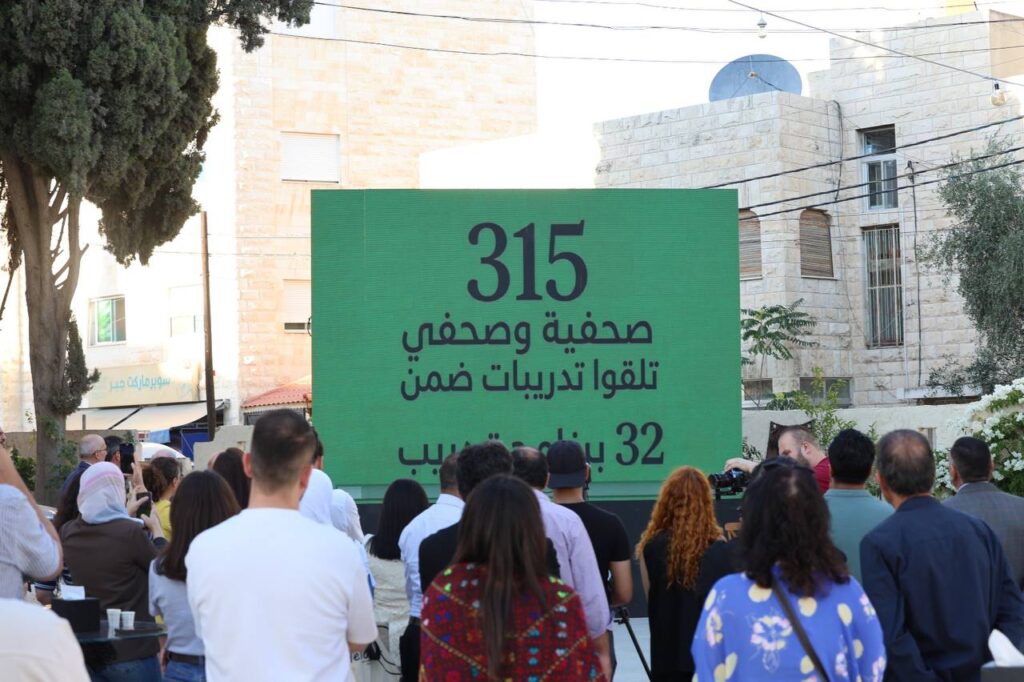
Between 2020 and April 2026, Qarib-supported journalists and media organisations produced more than 6,500 journalistic pieces across a wide range of formats, including investigations, documentaries, feature articles, podcasts, television reports, multimedia productions, photo stories and data-driven journalism, reaching more than 23 Million views across the region. Approximately 43% of these productions were authored by women, while nearly 46% focused on issues affecting women and girls.
Beyond content production, the programme invested in the long-term sustainability and resilience of independent media. More than 40 targeted training, mentoring and consultancy programmes were delivered in response to the specific needs of partner organisations. More than 20 media outlets benefited from an incubation programme implemented by the Samir Kassir Foundation, while the regional fact-checking initiative Sa7, implemented in partnership with Arab Reporters for Investigative Journalism (ARIJ), strengthened fact-checking capacities across the four countries.
Qarib also supported media innovation and structural reform. In partnership with Financia Times Strategies, the programme helped media organisations explore the opportunities and challenges presented by artificial intelligence. Through support to 7amleh, it advanced efforts to protect the digital rights of Palestinians. Advocacy initiatives implemented by the Union of Journalists in Lebanon and the Metro Center in the Kurdistan Region of Iraq contributed to strengthening the legal and institutional environment in which independent media operate.
One of Qarib’s defining characteristics was its ability to adapt rapidly to changing realities. Starting with COVID-19, and throughout periods of war, displacement and crisis, the programme maintained an agile and responsive approach, allowing support to be redirected where it was most urgently needed. This flexibility proved particularly important in providing emergency assistance to journalists and media organisations affected by conflict, especially in Gaza and southern Lebanon, helping them continue their work under extraordinarily difficult circumstances.
“Our role was simply to stay close to journalists doing difficult, often dangerous work with very little support or recognition, and to help them as best as we can, for instance through funding productions, and by providing consultancies and trainings,” said Henrik Ahrens, Director of the Qarib programme.
“Their reporting is a reminder that good information is itself a form of resistance against ignorance and authoritarianism – and that only informed people can make real choices. That conviction doesn’t end with a funding cycle.”
The ceremony highlighted not only individual excellence but also the strength of a regional network built through years of collaboration, mentoring, editorial support and shared commitment to public-interest journalism. Across its lifetime, the programme also created space for exchange across the region, convening more than 10 national and regional meetings and conferences, 15 online debates through The Qarib Talks, and three editions of the Qarib Journalism Awards. For many participants, it was an opportunity to reconnect with colleagues from across the region and to celebrate a community that has continued to strive despite increasingly difficult operating environments.
Taken together, the stories recognised this year offer a powerful portrait of a region confronting profound challenges while continuing to demand accountability, dignity and inclusion. They demonstrate the essential role independent journalism plays in documenting reality, informing public debate and ensuring that those most affected by conflict, exclusion and inequality are heard.
As the Qarib programme approaches its conclusion, the work celebrated through these awards stands as one of its most enduring achievements. The journalists, editors and media organisations recognised this evening will continue carrying forward the values that have guided the programme from the beginning: proximity to communities, commitment to public-interest journalism, and belief in the power of independent media to strengthen social cohesion.
Qarib in Numbers (2020–2026)
- 6,500+ journalistic productions covering marginalised topics and voices supported, 43% of them authored by women, 46% of focused on issues affecting women and girls
- 40+ tailored trainings, mentoring programmes and consultancies delivered
- 20+ media organisations supported through the incubation programme implemented by the Samir Kassir Foundation
- 10+ national and regional meetings and conferences convened, creating space for exchange
- 15 online debates through The Qarib Talks
- 3 editions of the Qarib Journalism Awards
- Regional fact-checking initiative Sa7 implemented with ARIJ
- AI innovation programme delivered in partnership with FT Strategies
- Digital rights initiatives supported through 7amleh
- Media advocacy programmes implemented with the Union of Journalists in Lebanon and the Metro Center
- Emergency support provided to journalists and media organisations affected by conflict, particularly in Gaza and southern Lebanon
About Qarib
The Qarib programme supports social cohesion and positive social change by improving the representation of minorities, marginalised communities and underreported issues in local, national and regional public discourse through support to media organisations in Jordan, Lebanon, Iraq and Palestine. Funded by the Agence Française de Développement (AFD) and implemented by CFI, the programme has worked since 2020 to strengthen independent media, support media innovation, foster public-interest journalism, and contribute to a more inclusive media ecosystem across the region.
For more information, visit www.qaribmedia.com.