As the Qarib program approaches its conclusion in the coming month of June, many of our partners in Palestine, Lebanon, Iraq, and Jordan have completed their media productions under this program, which has so far supported more than 5,500 diverse media pieces across the four participating countries. Hundreds of journalists working within partner platforms have also benefited from professional capacity-building programs, alongside the psychological support program that we have ensured continues to this day—recognizing the importance of providing such support, especially in light of the difficult circumstances the region is facing and the exceptional pressures placed on journalists, particularly when their work involves direct coverage of tragedies and crises unfolding in our countries.
Throughout the years of the program, Qarib has focused on supporting independent and professional journalism committed to accuracy and fact-checking, contributing to media pluralism and fostering a space for constructive public dialogue based on discussion rather than polarization. It has also placed special emphasis on content that promotes social cohesion and gives real space to the voices of women, youth, and marginalized groups, with a focus on transparency, accountability, and highlighting the impact of public policies on citizens’ lives.
The program also encouraged the production of journalistic content closely connected to people’s daily realities, addressing issues such as education, health, public services, the environment, local economies, unemployment, and local governance, in addition to combating misinformation and offering in-depth reporting that sheds light on societal challenges and possible solutions—away from inflammatory or sectarian rhetoric, and free from any promotional or partisan content.
Among the program’s ongoing activities has been the organization of a series of seminars addressing various issues relevant to journalists and the general public, hosting journalists to discuss the background of events and the potential scenarios they present.
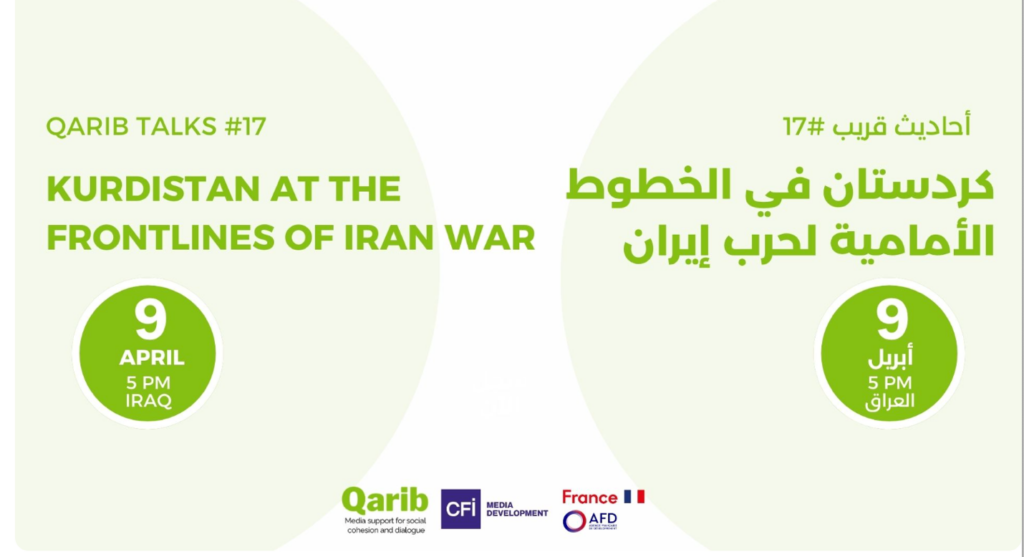
The latest of these activities within the Qarib program was a seminar in the “Qarib Talks” series, which discussed developments in Iran and the war waged by the United States and Israel from the perspective of the Kurdish issue. The session examined the reality of Kurdistan at the heart of regional transformations and explored the future of the “front lines” in confrontation with Iran amid rapidly evolving developments in the region. The discussion focused on the role of the Kurds and their future within the context of the current regional conflict with the Iranian regime, with participation from leading researchers and activists. Scenarios following the “fragile truce” and their implications for Iranian Kurdistan and the Kurdistan Region of Iraq were reviewed. Participants agreed that the ceasefire does not represent the end of the conflict but rather a “pause,” as Mohammad Saleh, a non-resident senior fellow at the National Security Institute of the Foreign Policy Research Institute in the United States, noted that the strategic objectives of the war had not been fully achieved, leaving room for Tehran to rebuild its military capabilities. Meanwhile, Iranian human rights activist Samira Ghadiri warned that the truce is being used merely to buy time, pointing to continued arrests and pressure in Kurdish مناطق despite the declared de-escalation.
Additionally, Iraqi Kurdish journalist Soran Balani emphasized that Kurdish struggle in Iran transcends sectarian divisions in favor of national and rights-based demands, stressing that economic and political marginalization and the absence of a concept of citizenship reinforce the centrality of national identity in Kurdish mobilization. Iranian writer and journalist Sarteb Jawhar addressed the crisis of trust in international promises and Kurdish fears of repeated betrayal and being used as a bargaining chip among major powers. The seminar concluded that the continuation of the current situation in Iran could lead domestically to increased executions and security pressure in Kurdish regions, and externally to greater pressure on the Kurdistan Region of Iraq—making the Kurdish issue a central factor in regional balances between realities on the ground and demands for international recognition of legitimate political and human rights.
For more details, you can watch the full episode at the following link: Qarib Talks #17: Kurdistan on the Frontlines of Iran’s War
The killing of journalists continues, as does impunity
In Lebanon, Lebanese journalist Amal Khalil was killed in an Israeli airstrike that targeted a house in the town of Tayri near the southern border, while another journalist accompanying her was injured. The Lebanese Minister of Information described the attack as deliberate.
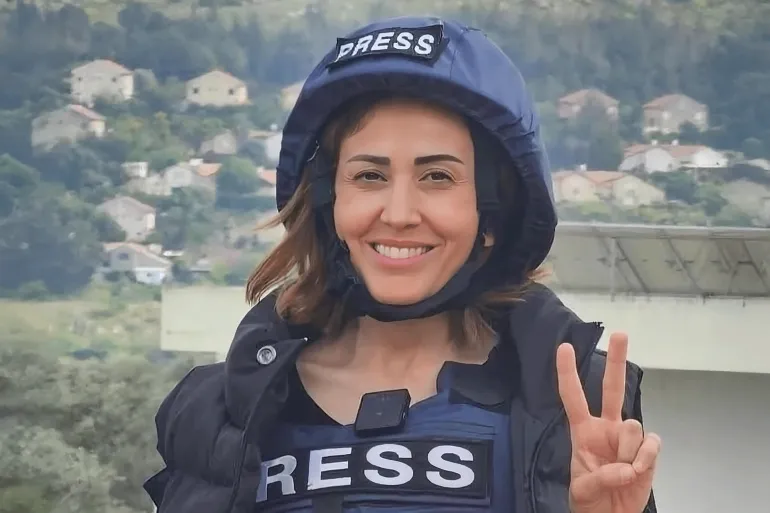
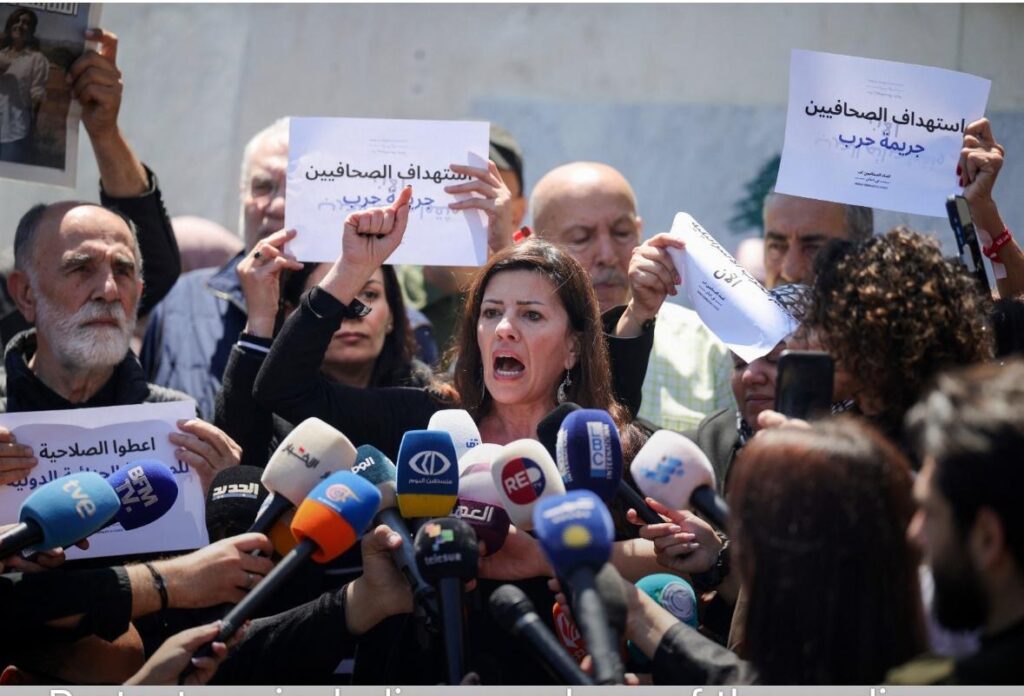
The “Alternative Press Syndicate/Union” called on the Lebanese state to take urgent action to protect journalists and hold perpetrators accountable, stressing the need to end impunity.
The statement called for a series of measures, most notably: centralized and systematic documentation of crimes, opening serious judicial investigations into violations against media professionals, adopting a special law criminalizing war crimes and grave violations, requesting the formation of an international fact-finding committee from the Human Rights Council, and granting the International Criminal Court jurisdiction to investigate crimes committed against journalists since October 8, 2023.
Lebanese journalists also organized a protest in Martyrs’ Square in Beirut.
A seminar on media freedom and information challenges in the Kurdistan Region
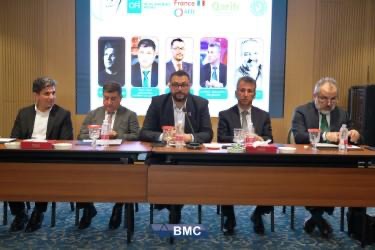
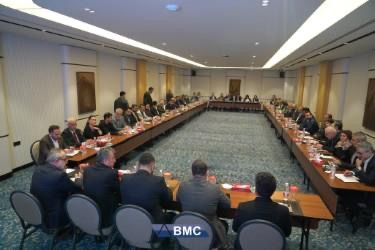
The Metro Center for Journalists’ Rights organized a roundtable titled: “News and Information: Between Media Freedom and Government Directives in the Kurdistan Region.” The session was held with support from the Qarib program and included journalists, editors-in-chief, legal experts, as well as government representatives, MPs, judges, and civil society representatives.
The session came amid increasing pressure on media institutions in the region due to recent security developments and the multiplicity of directives issued by governmental and security bodies regarding media coverage, creating confusion among journalists—particularly when covering missile and drone attacks targeting these areas.
Participants discussed the need to balance media freedom with the public interest and the public’s right to access information, as well as the extent to which government directives align with the Iraqi constitution, press laws, and international standards for freedom of expression. Legal experts warned that ambiguity or contradictions in these directives could restrict press freedom and affect journalists’ ability to cover issues of public interest.
Read the full detailed story here
Gaza and post-war stories
As for our partners’ productions, we selected two stories from Gaza, which remains central to coverage by Palestinian platforms.
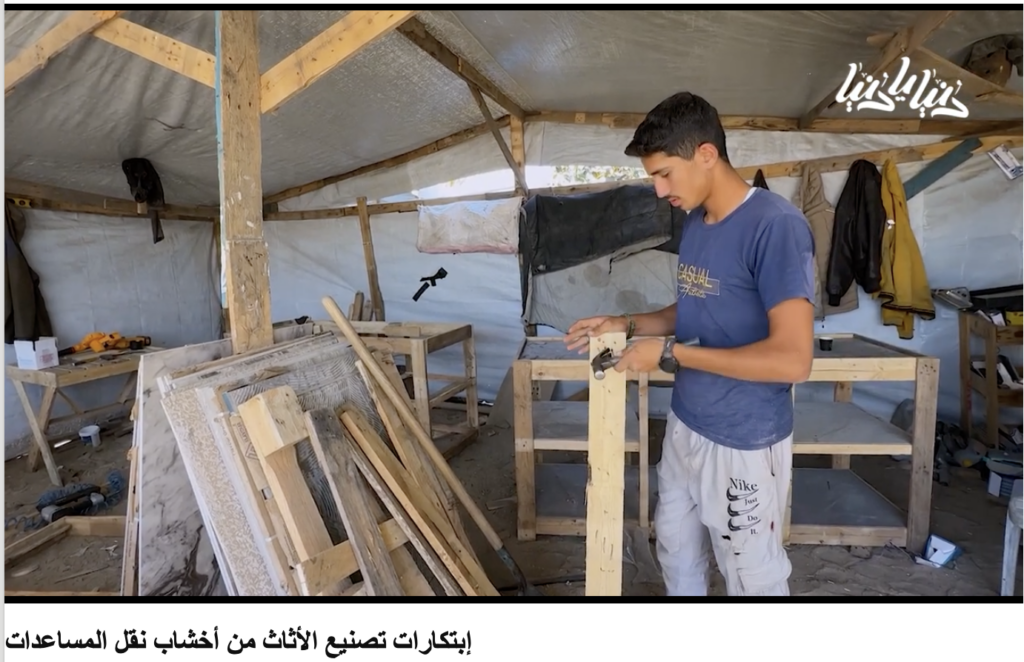
The first story, by Roya Palestine TV, focuses on recycling wooden aid boxes into furniture for homes.
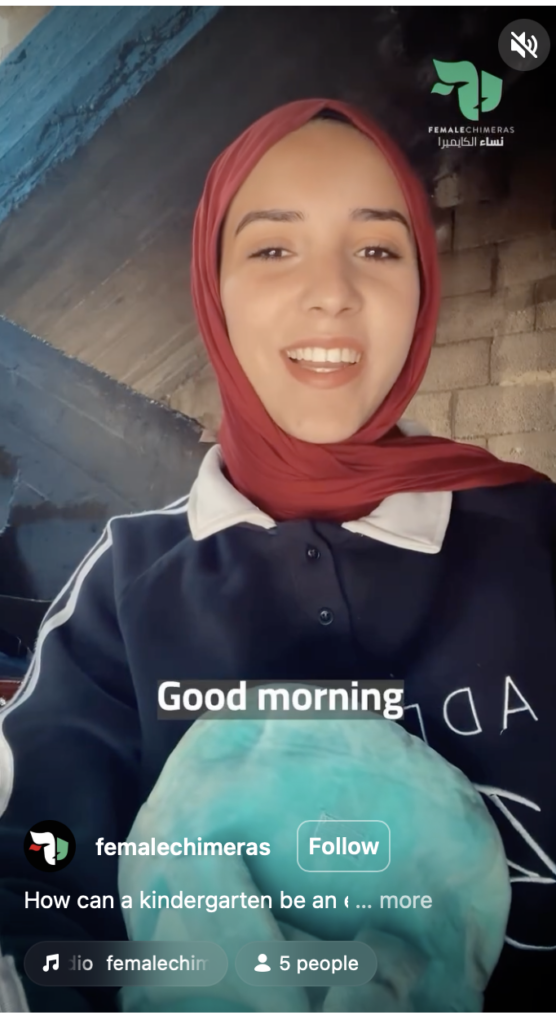
The second story explores resilience and adaptation to harsh realities through a narrative that asks: how can a kindergarten become a form of resistance? It follows Lana on her daily journey taking her child to kindergarten, reflecting deeper meanings of protection, continuity, and creating hope in difficult circumstances. Through her personal experience, everyday roles are redefined as quiet acts of resistance that build the future.
Qarib Journalism Award

Finally, to all colleagues who applied for the Qarib Award: you can expect the results in mid-May. The jury is currently reviewing and evaluating submissions according to high professional standards.
What can already be noted is that this year’s submissions are of high quality, professionalism, and creativity—and in greater numbers than last year. Thank you for your trust in this award, which aims to celebrate journalists who push the profession forward and address topics with accuracy and professionalism.