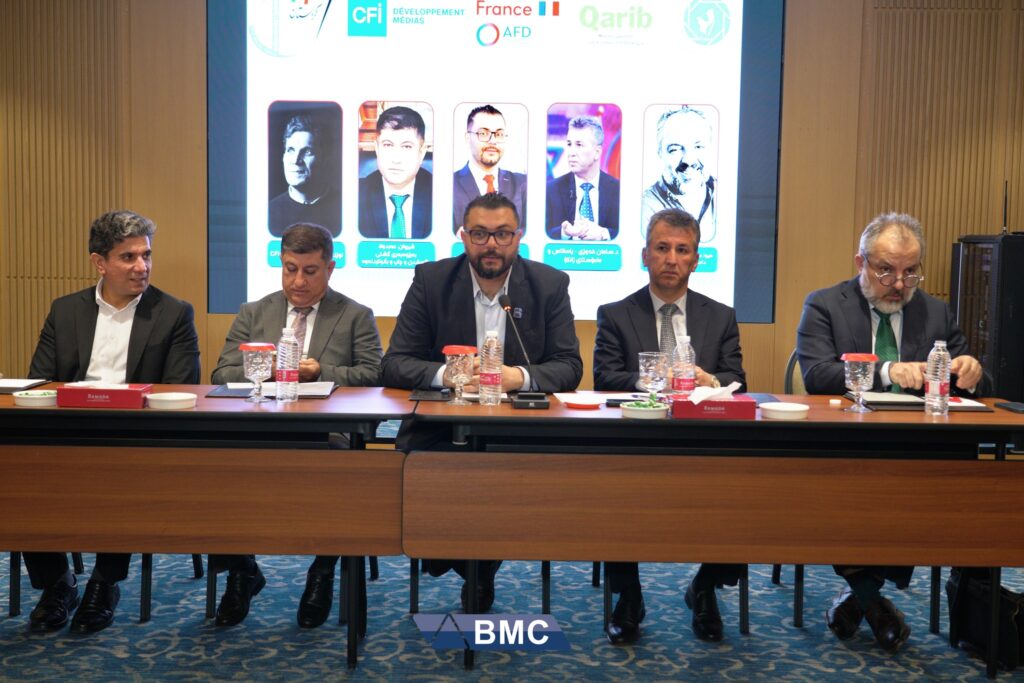
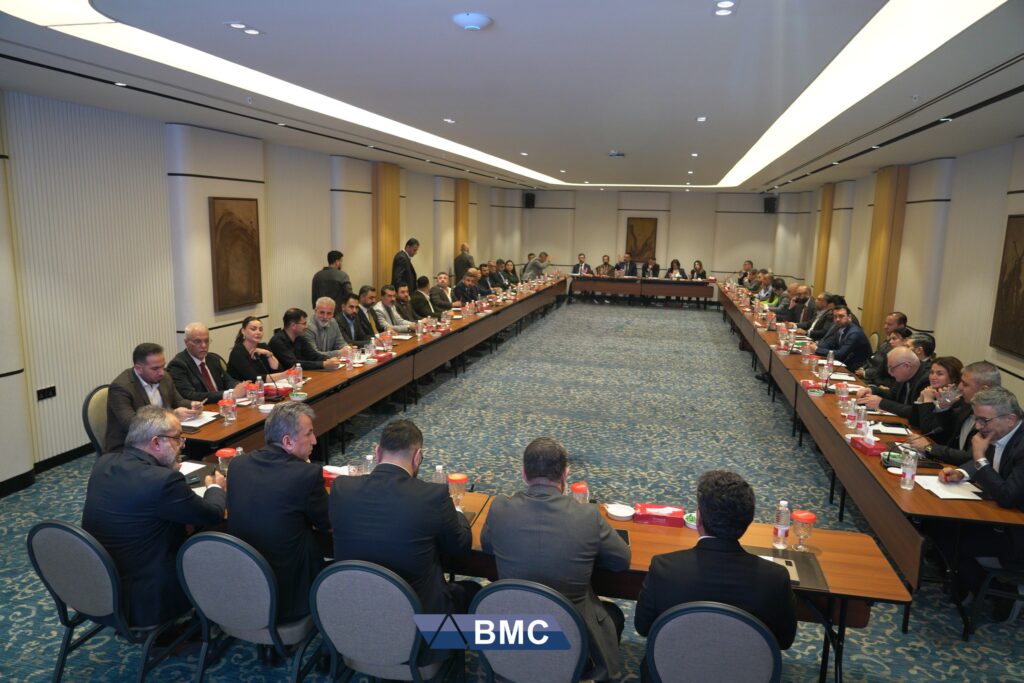
On April 22, 2026, coinciding with Kurdish Journalism Day, Metro Center for Journalists Rights and Advocacy organized a roundtable dialogue session titled “News and Information: Between Media Freedom and the Guidelines of Kurdistan Regional Government Institutions.” The session was held with the support of CFI and the Qarib project, and brought together journalists, media managers, legal experts, academics, government representatives, parliamentarians, judges, and civil society actors to discuss the challenges facing media freedom and access to information in the Kurdistan Region.
The roundtable was organized at a time when media institutions in the Kurdistan Region have faced increasing pressure due to regional security developments and the issuance of several instructions by different government and security bodies regarding media coverage. Participants said these multiple and sometimes overlapping guidelines had created confusion for journalists, especially during coverage of missile and drone attacks affecting the region.
The session featured interventions by Diyaree Mohammed, Executive Director of Metro Center for Journalists Rights and Advocacy; Sherwan Abdullah, Director General of the Directorate of Media and Publishing; Dr. Saman Fawzi, legal expert and university professor; Hiwa Osman, General Manager of Channel +964; and Qassim Khidhir, Representative and Media Advisor at CFI.
Speakers discussed the need to balance media freedom with public interest, and national security with the public’s right to access information. They also examined whether government instructions are compatible with the Iraqi Constitution, press laws, and international standards on freedom of expression. Legal experts warned that unclear or excessive guidelines could create precedents that restrict press freedom and limit journalists’ ability to report on issues of public concern.
Media managers and journalists said that the large number of guidelines issued by different authorities made their work more difficult. They stressed the need for clear, unified, and legally grounded instructions, rather than separate directives from multiple institutions. Sherwan Abdullah explained that some government institutions issued their own guidelines after earlier instructions from the Ministry of Culture were not followed by media outlets.
The discussion also addressed the political environment of the media sector in the Kurdistan Region. Several participants argued that many media outlets are influenced or controlled by political parties, which affects the equal application of laws and instructions. They emphasized that any rules related to media coverage must apply equally to all media organizations, including party-affiliated outlets.
Qassim Khidhir spoke about CFI’s work and highlighted the role of the Qarib project in Iraq and the wider Middle East. He explained how CFI and Qarib support media institutions, strengthen professional journalism, promote access to reliable information, and create opportunities for journalists and media organizations to benefit from capacity-building and development programs.
The roundtable was attended by 69 participants, including 29 women and 40 men, exceeding the planned number of 50. More than 40 media outlets covered the press conference and dialogue session.
At the end of the three-hour discussion, participants presented several recommendations. They called on government and security institutions to issue media-related decisions only through clear legal frameworks and authorized bodies. They also recommended equal access to information for all media outlets without discrimination, and stressed that no guideline should violate the Iraqi Constitution, press laws, or the right to access information. Participants further called for unified guidelines, equal application of rules, stronger professional training for journalists, and the possible establishment of an independent media council to monitor and evaluate media content based on professional and ethical standards.