
On International Women’s Day, we don’t just celebrate numbers and slogans; we listen to the stories whispered amidst the noise. Stories of women who lost, who persevered, and who tried to rebuild their lives despite war, loss, and betrayal.
In this publication, we highlight the stories of women who live in the shadows, creating spaces of hope, and clinging to life in the harshest of circumstances.
We begin this special International Women’s Day issue by celebrating the achievements of the partners in the Close to Women program, and we continue to support women’s voices to build more cohesive societies.

Widows after the Israeli war in the shadows

An investigation that examines the reality of women who lost their husbands during the war, and the economic, psychological and social burdens they face in the absence of official support, in contrast to the role of women’s organizations in bridging the gap and providing basic protection.

From a displaced persons’ tent, the Girls’ Club in Gaza was born—a safe space where girls meet to draw, write, dream, and rediscover themselves. Rahaf, a business administration graduate, launched the “Voices of Tomorrow” initiative to give girls what she herself lacked at her age: support, inclusion, and the ability to express themselves amidst chaos and war. This story documents the club’s journey, the girls’ stories, and the moments of loss they experienced… and also how hope endures, and how a simple tent can transform into a home filled with color, life, and peace.

In this video, Rania recounts her heartbreaking story as a Palestinian mother who lost her children and husband in the war in Gaza. Between the details of caring for her infants, the dress she was preparing for her daughter Soso’s Eid, and the memories that haunt her, we hear the story of a woman bearing unbearable grief yet clinging to hope and patience.

Women’s voices in war on the Shrekah Walaken podcast.

Ramadan lanterns light up tents in Gaza: Rehan Sharab’s initiative illuminates Palestinian homes and tents during Ramadan in Gaza.

Palestinian women farmers defy the norm: Resilience and creativity in the face of challenges after developing a crop that provides an alternative to livestock feed.

The idea is not about Warda or Latifa themselves, but about the presence of women and romantic relationships in Arabic song and the change in this discourse over the last 30 years; so how do women sing about their relationships with men? And how does the Arab man sing about himself as the center of women’s lives?

Iraqi law considers the father to be the legal guardian, even if he declares before the judge that he does not want his daughter. The court rejected Hanin’s request to obtain full guardianship, despite the judge knowing that the child did not receive any support from her father, neither material nor parental, so the fate of the mother and child remains suspended by the decision of a father who is absent from responsibility, and present only in the details of revenge.

Reham Haji was kidnapped by ISIS when she was 10 years old, and was freed at the age of 21.
Reham Haji is a Yazidi girl from the Khansori community in Sinjar. In 2014, when ISIS seized control of Sinjar, she was 10 years old. She and 77 other members of her family and relatives were captured by ISIS militants. At the end of last month (July 2025), she was rescued in the Kurdish region of Syria and was able to return to her family. She says, “They took me as a slave. For two years, I worked as a domestic servant in Abu Bakr al-Baghdadi’s house.”

A video report about a group of young women in Halabja Governorate who work installing electricity for homes and commercial establishments.

This report addresses the phenomenon of some brokers exploiting orphaned and displaced girls, taking advantage of their difficult living conditions. They are lured with promises of work or assistance, only to find themselves later in disreputable places or in immoral situations. The report highlights the seriousness of these practices and the need for awareness campaigns to curb them.
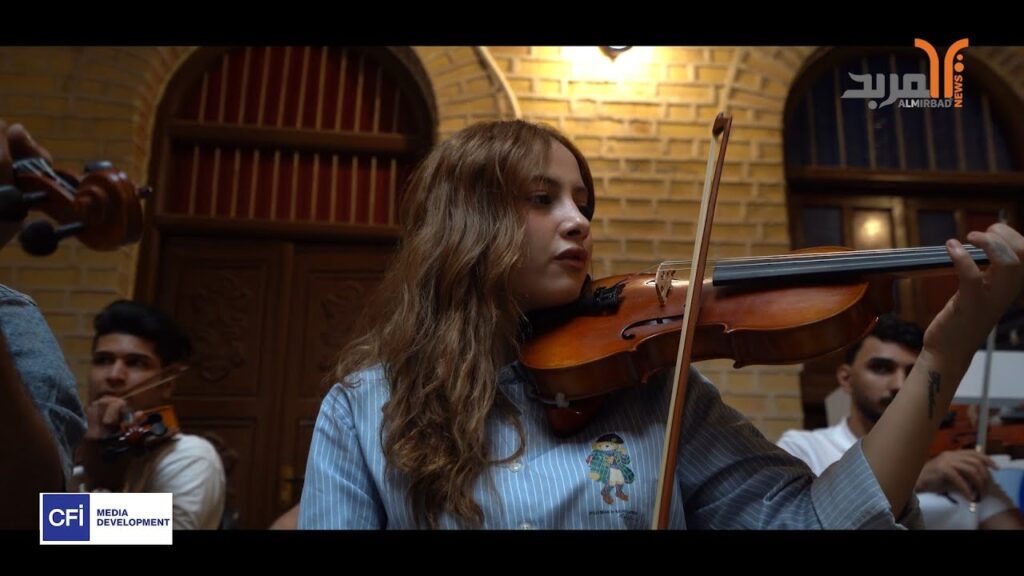
Al-Fayhaa Choir… young men and women from Basra, academically trained, brought together by their love of music.

This report addresses the phenomenon of some brokers exploiting orphaned and displaced girls, taking advantage of their difficult living conditions. They are lured with promises of work or assistance, only to find themselves later in disreputable places or in immoral situations. The report highlights the seriousness of these practices and the need for awareness campaigns to curb them.
Iraqi women lose custody of their children after the retroactive application of the Jaafari law.

The report prepared by journalist Fatima Karim deals with real stories of Iraqi women who lost custody of their children after the retroactive application of the Jaafari Code. Granting men the right to convert their divorce contracts from Personal Status Law No. 188 to the Jaafari Code without the consent of their ex-wives led to thousands of Iraqi mothers losing custody of their children because the law stipulated that custody be granted to the father at the age of 7 for a girl and at the age of 2 for a boy. Some of the law’s clauses were later amended under public pressure.

A former Iraqi taekwondo champion and gold medalist now faces a difficult reality after becoming paralyzed. Despite her sporting achievements that raised Iraq’s name high, this woman lives on the margins of society and suffers harsh conditions, calling for support and recognition of her contributions to national sports.